 Two hours before first pitch, the single most valuable piece of information in baseball becomes public, and most bettors have already placed their bets.
The lineup card.
Not who's pitching — that's known days ahead and priced accordingly. The order. Because everything a hitter can possibly do is capped by how many times he gets to hold a bat, and that's decided by a manager filling in nine slots at four o'clock.
The Number That Should Change How You Bet
Batting second is worth roughly one extra plate appearance over batting seventh.
Read that against a total-bases prop and the implication is uncomfortable: one plate appearance is frequently the entire margin of the bet. Not a rounding error, not an edge case — the whole thing.
A hitter you like at 1.5 total bases is a materially different bet in the two hole than in the seven hole, and the price often doesn't move nearly enough between them. Over a season the leadoff man gets something like 60 or 70 more trips than the guy hitting eighth on the same team. That's a month of extra baseball.
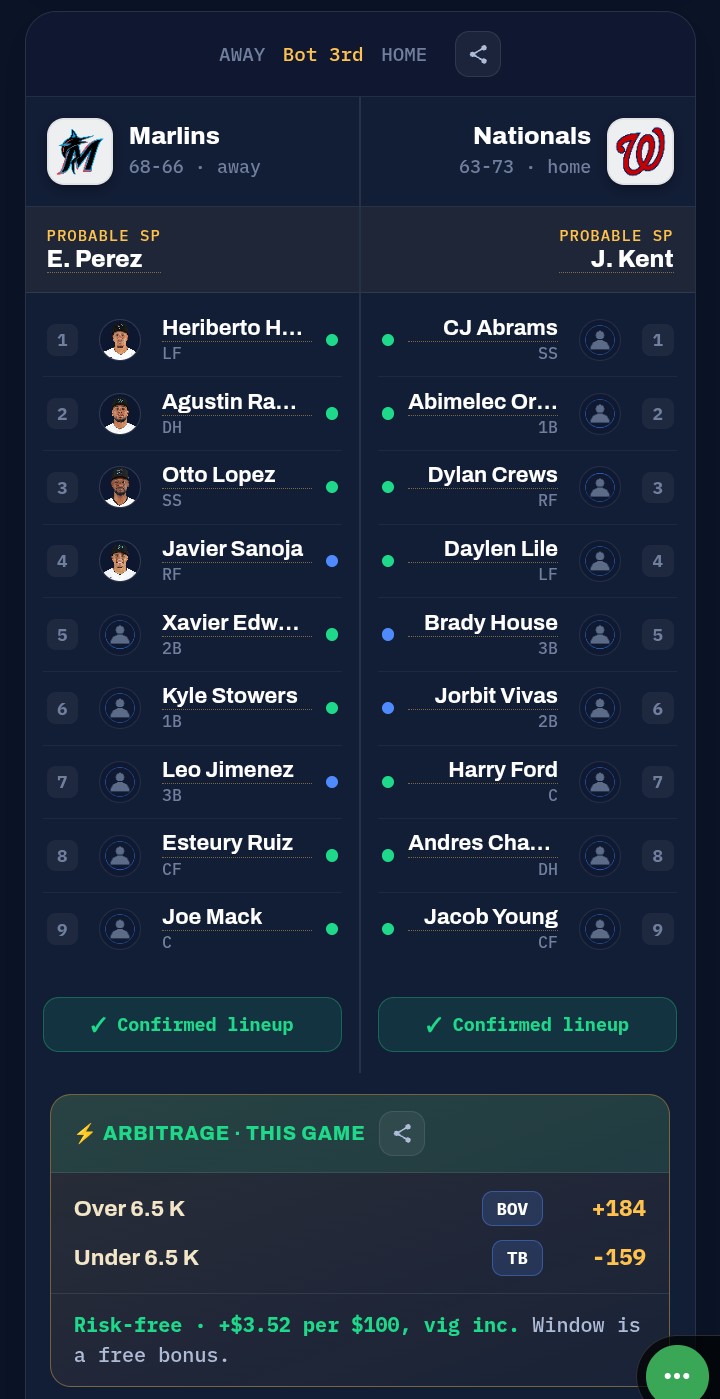
The lineups page carries today's confirmed cards and probable pitchers — batting order, handedness, and the props posted on each name, so the order and the price sit in the same view instead of two tabs.
Handedness Is The Other Half
Printed next to the order because it changes the read completely.
A lefty-heavy lineup against a left-handed starter isn't the same offense that showed up yesterday — and platoon splits mean the guy who sat last night may be in tonight precisely because of the arm he's facing. That's not bad luck when your player is scratched, it's a system, and it's readable in advance.
Then layer batter vs pitcher on top. Not the useless career line — zones. It overlays any hitter's hot areas against where tonight's pitcher actually lives, so you find the attack zone before first pitch rather than explaining it afterwards.
A hitter who crushes low-and-in against a pitcher who lives low-and-in is a reason. A hitter who's 6-for-19 lifetime is a coincidence with a decimal point.
Three More Things Knowable Before First Pitch
Ballpark weather — and the reason ours is worth reading is that it measures wind against each park's own orientation. Fifteen miles an hour is a meaningless figure; fifteen blowing out to left at a park that already plays short is a different game. Temperature, humidity, roof status and a home run effect per game.
The bullpen report — usage, rest and availability. A pen that threw three innings last night is the most underpriced thing on a late-inning total, and it's knowable at four o'clock.
The player wire — player items only, no team marketing or ticket promos. Scratches and call-ups land here first, and a scratch discovered at 7:05 is a bet you shouldn't have made. The injury report alongside it.
Then Price It
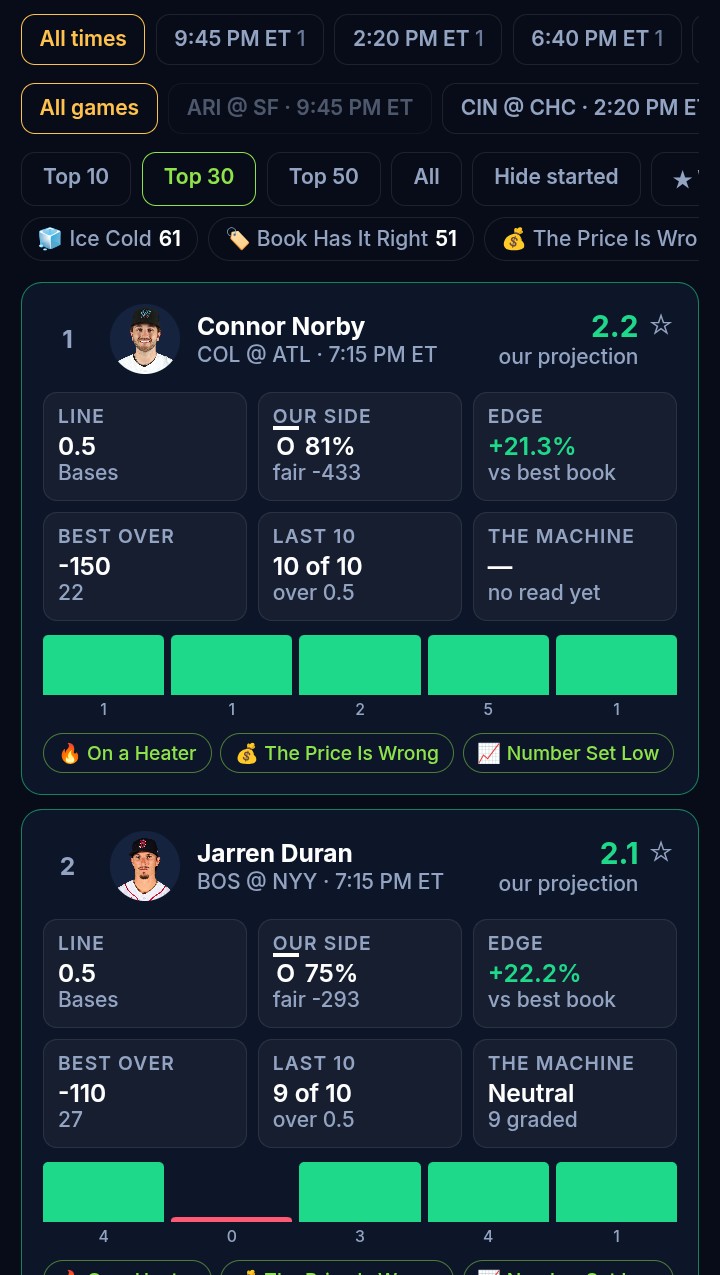
The Projection Board puts our number on every hitter and pitcher against the best price across nine books, with the edge between them — hits, total bases, home runs, H+R+RBI, RBIs, runs, walks, steals, plus pitcher strikeouts, earned runs, hits and walks allowed, outs.
Check it against what's actually happened: the hit-rate board shows every prop's real rate over the last 5, 10 and 20 in traffic-light colour. When the short window and the long window disagree, something changed — very often a lineup slot — and that's worth thirty seconds of your time.
The unders board catches lines hung above what a hitter is producing, and the structural reason they stay soft is human: nobody wants to root for a man to do nothing. Books shade toward the over because the public buys the over.
Then devig to find the fair number, Poisson for anything arriving as a count — which is most of baseball — the heat map to shop nine books, and Kelly to size it.
Building a ticket? The slip builder and the parlay builder, then the Parlay Doctor grades it A through F — and it catches the trap that kills baseball tickets: a pitcher's strikeout over stacked with the opposing team's total under is one bet wearing two hats.
Setting A Fantasy Lineup Instead
The start/sit board grades every startable bat on the work he gets and the arm across from him. DFS Edge puts salary against real production, and Who's Hot Tonight runs off graded results rather than a nice highlight.
Everything for a given night is collected on MLB Tonight, and the season-long view — scores, standings, all 30 clubs — is on the MLB hub.
And We Post Our Own Calls
The verdict slate carries our call on every game with the running record beside it. Every one locks before first pitch and gets graded the next morning against the number it was locked at — win, loss or push, onto the public ledger.
And the calibration page asks the harder question: when we say seventy percent, are we right seven times in ten?
The Honest Part
Lineups get scratched after they're posted. A manager changes his mind, somebody tweaks a hamstring in batting practice, and the card you read at 4:30 isn't the one that takes the field.
Which is an argument for checking closer to first pitch, not for skipping it. Everything else in baseball is a lagging indicator of who is actually in the box.
21+. Lineups drop late and prices move — always confirm at the book. 1-800-GAMBLER.