
Every fantasy manager has had the same argument in October: was that a good draft, or did I just get lucky?
You can't answer it from one season. One season is a single roll of the dice — a starter tears something in Week 3, a rookie explodes, your opponent streams four goalies in the final week. None of that grades your draft.
So the season simulators do the only thing that actually answers it. Draft the roster, play the whole season, then run it a hundred more times.
One season is a story. A hundred is a verdict — the same roster, the same league, a hundred different years.
The Mock Draft Simulators
Unlimited reps against position-aware AI opponents drafting off the house rankings — not bots taking the highest name left, but a room that fills needs the way humans do.
You get tiers drawn where the talent actually cliffs, steals flagged when value falls past where it should, a report card at the end, and every team's roster visible so you can see what the room did around you.
The hockey one handles the harder problem: skaters and goalies drafted against each other, on one scale, which is the thing most mock tools quietly refuse to do.
Why reps beat rankings
Here's the part people underrate. Drafting from pick 1 and drafting from pick 12 are completely different games.
A ranking list tells you who's good. It doesn't tell you who will still be there when you're on the clock — and that's the only question you actually face. The managers who win from a rough slot planned for it in September, because they'd already seen what reaches pick 9 twenty times.
The Season Simulators
Basketball — draft a full 13-man roster, nine starters and four on the bench, then play 18 weeks head to head with playoffs from week 19.
Hockey — a 16-man roster and 20 weeks, because hockey rosters carry more bodies and the season runs longer.
Draft against the room, play it out, win or lose a championship. That's already more useful than a mock, because a mock ends at the moment the real uncertainty starts.
Then the hundred
This is the feature, and it's the honest one.
Run the same roster through a hundred seasons and you get a distribution instead of an anecdote. A team that wins the title once in a hundred and a team that wins it forty times in a hundred can look identical after one year — and they are not remotely the same draft.
It's the same logic as sizing a bet with Kelly rather than betting on a feeling, or reading a calibration page instead of a highlight reel. The single result tells you almost nothing. The shape of a hundred results tells you everything.
Use Them Together
1. Learn the room — run mocks from your actual slot until you know what genuinely reaches you.
2. Check the schedule before you finalise anything. In head-to-head basketball a four-game week is worth a third more than a three-game week from the same player — the NBA grid counts every club Monday to Sunday. In hockey, back-to-backs decide goalies, and the spread is enormous: the Penguins play fifteen, the Flames eight.
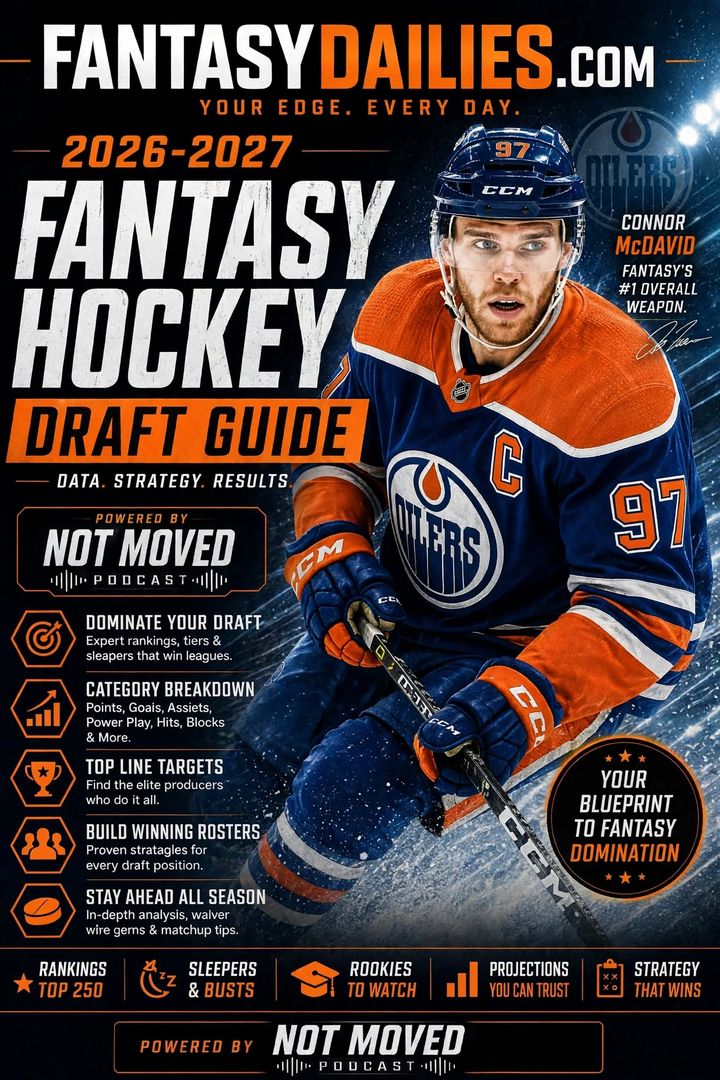
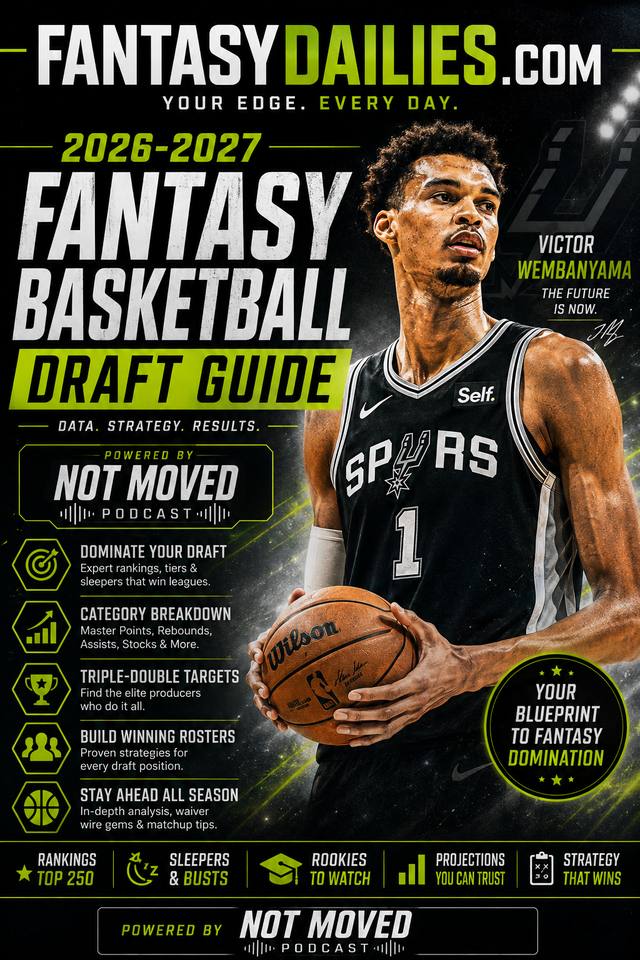
3. Draft the real thing, with the basketball guide or the hockey guide open.
4. Then simulate the roster you ended up with a hundred times, and find out whether you need to trade before Week 1 rather than after Week 6.
That last step is the one nobody does, and it's the cheapest information available all season.
The Guides Behind The Rankings
Both simulators draft off the same house rankings the guides use — Top 250 scored on nine categories in basketball, skaters and goalies on one scale in hockey.
All three guides sit together at the draft guide hub, including football, and they're included free with a Velvet seat at $9.99.
Football has its own mock simulator too, plus the December Board — which is the football version of the same idea, grading every player on the three weeks that actually decide a title.
Once The Season Starts
Minutes in basketball, shots on goal in hockey — both for the same reason. Volume is a role, results are a percentage, and roles move slower than results do.
Then start/sit for basketball, hockey, and the player wires — NBA, NHL — because everything else is a lagging indicator of who's actually on the floor or the ice.
The Honest Part
A simulator is a model, and a model is a set of assumptions with a nice interface. It doesn't know that a coach is about to be fired or that a goalie is quietly hurt.
What it does do is remove the worst reasoning error in fantasy — judging a process by a single outcome. Your draft was good or bad before the season started, and a hundred runs is the closest you'll get to finding out which.
Run a hundred basketball seasons → · A hundred hockey seasons →