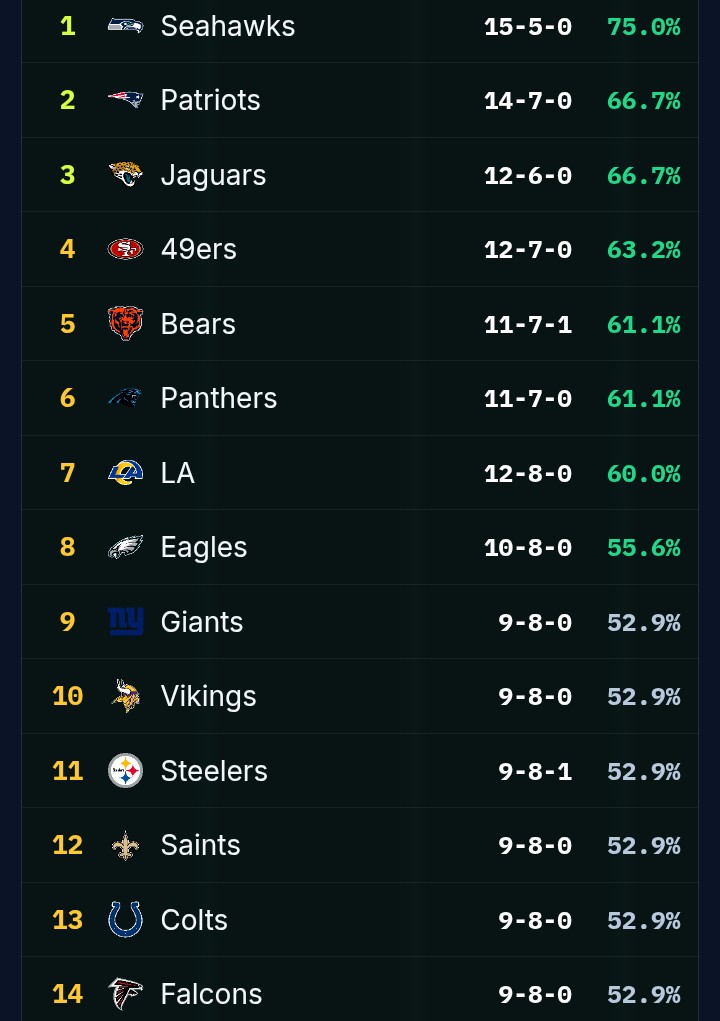
All 32 teams against the spread, ranked 1 to 32, filterable four different ways — home, road, favorite, underdog — across three seasons. It sounds like a simple stat board and it's actually the single most misread number in football betting.
The Trap: Reading A Cover Streak As A Trend
Here's the instinct almost everyone has, and it's backwards. A team covers five straight and the instinct is to ride it — the team is "hot against the number," so bet them again.
A long cover streak usually means the opposite of what it feels like. Covering repeatedly means the team has been outperforming what the market expected of it, which is exactly the signal that should make the market adjust. And it does — a team on a cover streak gets a tougher number the next time out, because the books have seen the same streak you have. The value that produced the streak has already been priced away by the time you're looking at it.
The actually useful read is closer to the reverse: a team that's been covering consistently is now facing a harder number, and a team that's been missing the number consistently — check it against team streaks — is more likely getting a number that undersells it.
Why The Four Splits Matter More Than The Overall Number
A team's overall ATS record blends four genuinely different situations into one number, and that's a problem, because those four situations aren't remotely equivalent.
Home versus road isolates whether a team's edge is real or a product of comfort and crowd noise — a team that only covers at home is telling you something different than one that covers everywhere.
Favorite versus underdog separates a team that wins outright from one that's live specifically when getting points. Some teams are simply better underdogs than favorites — looser, more physical, playing without the pressure of being expected to win — and that's invisible in a blended number.
A team's overall record can look completely ordinary while one specific split — road favorite, say, or home underdog — is a genuine, repeatable edge. That's exactly why the board splits it four ways instead of handing you one number and calling it done. Cross it against Schedule Spots for the situational context underneath a given split — rest, short weeks, letdown spots — tested against 25 years with the sample size printed on every result.
Three Seasons, Because One Is Noise
ATS results carry more year-to-year randomness than almost any other football stat, because a two-point miss and a two-point cover are separated by a single fluky play — a blocked kick, a garbage-time score, a bad spot. One season of ATS data is closer to noise than signal.
Three seasons is where a real pattern starts to separate itself from variance. A team that's been a reliable road underdog cover across three years has shown you something about its identity that a single hot month can't fake. Pair it with the actual offense and defense numbers behind those results — a cover streak with a real statistical improvement underneath it is a completely different situation than a cover streak riding on turnover luck, which the turnover board exists to catch.
How To Actually Use It Before You Bet
Start with the split that matches tonight's actual situation — a home favorite doesn't care what a team's road-dog record looks like. Cross that number against where the team actually ranks on merit, and against the Mismatch Machine for whether this specific opponent creates a real mismatch or just a name on a schedule.
Then price whatever you're looking at with devig to find the fair number underneath the vig, and check the heat map before you take a price — a genuine ATS edge is worth less if you're paying an extra half point of juice to access it. Kelly sizes the stake once you've got a real number to work with.
Our own picks run the same discipline in public: the verdict slate locks every call before kickoff and grades it the next morning against the number it was actually locked at — never the closing line, because grading against a number that moved after the call flatters nobody but us. The full ledger and the calibration page are where you check whether that discipline has actually produced anything.
The Honest Part
ATS trends describe the past accurately. They don't promise anything about tonight — rosters change, coordinators leave, and a three-year trend can end the exact week you finally bet on it. What the splits genuinely buy you is a sharper question than "is this team good," which is close to useless for spread betting. The better question is "which specific situation is this team actually good in," and that's precisely what four splits over three seasons is built to answer.
21+. 1-800-GAMBLER.