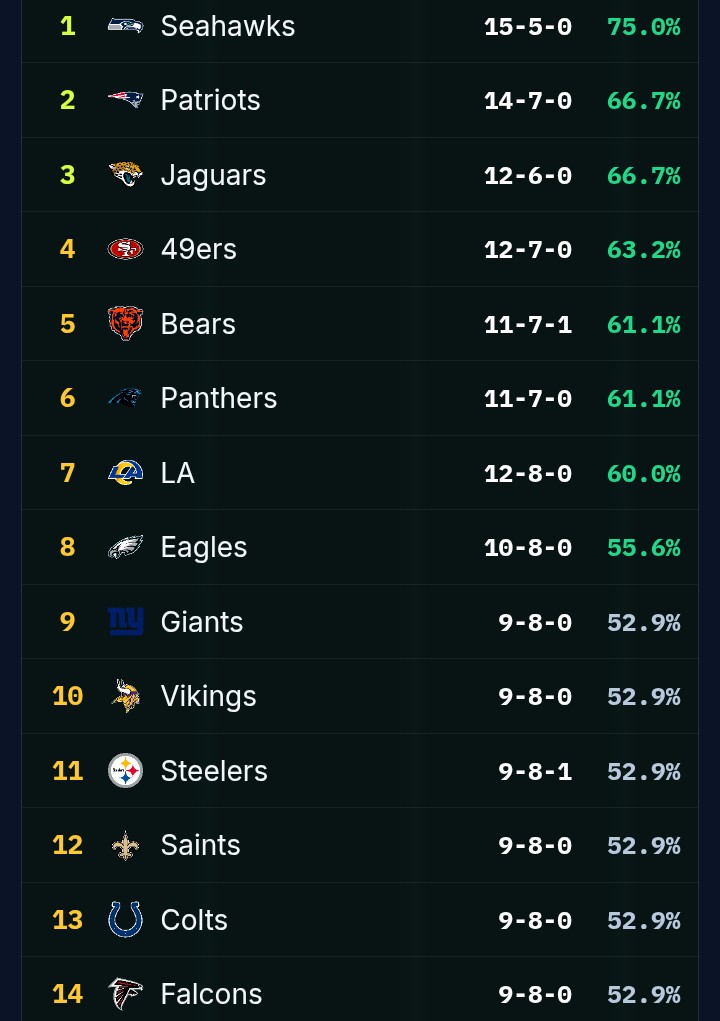
All 32 teams, ranked 1 to 32. That sentence describes roughly forty other power rankings pages on the internet too, so here's the part that actually separates them: this one is built by our own house model, not aggregated from other outlets' lists and averaged into something safely in the middle.
Why "Borrowed" Rankings Are Worthless
Most power rankings you'll find are a media personality's gut check, published Tuesday morning, reshuffled slightly from last week's list because reshuffling feels like work. Some outlets go further and average a panel of writers together — which sounds more rigorous and is actually worse, because averaging six opinions produces a consensus nobody actually holds. The result reads as authoritative and means nothing.
A model-built ranking is a different claim entirely. It's not "what do a few people think" — it's "what does the actual data say," run the same way for all 32 teams, updated the same way every week, with no personality-driven inertia keeping a fading team ranked on reputation.
Tap Any Team For The Receipts
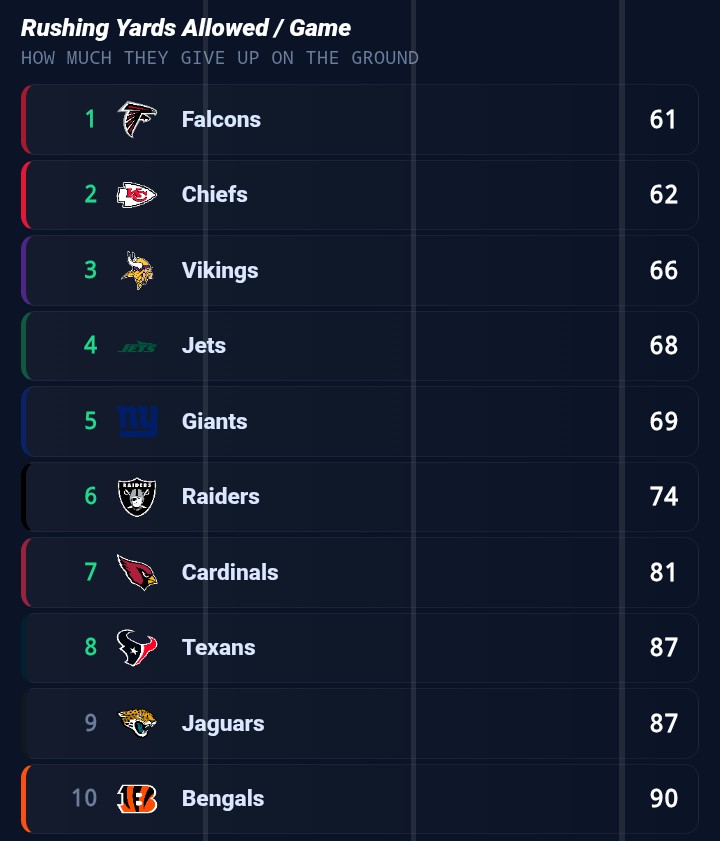
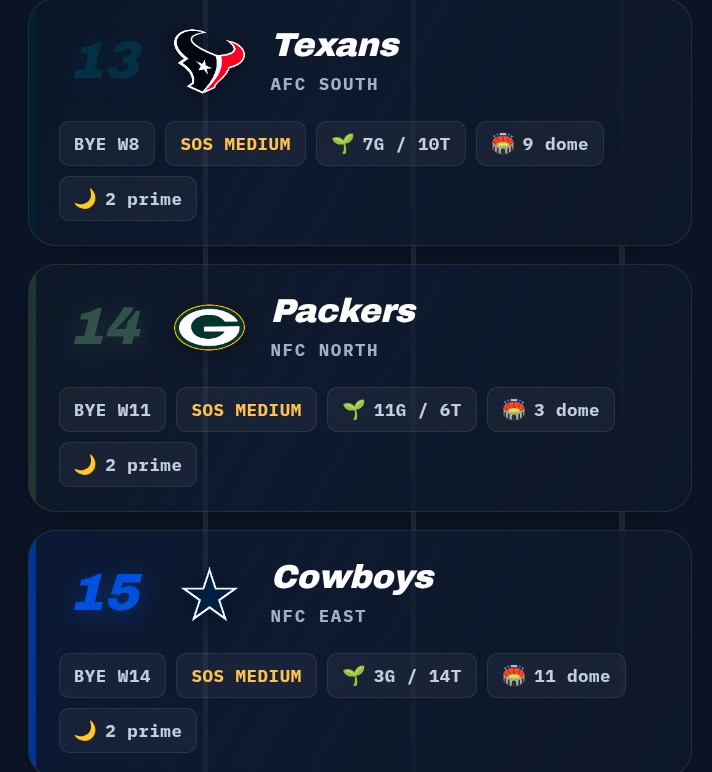
Every team on the board links straight through to its own page — which is the part that makes a power ranking checkable rather than just asserted. You don't have to take the rank on faith. Offense and defense stats, ATS record, goal-line usage — the inputs sit one tap behind the output, so a rank you disagree with is a rank you can actually go argue with using the same numbers the model used.
Where A Ranking Genuinely Helps
Spot value, not just quality. A team ranked 8th and priced like a top-3 team is a signal worth checking against the verdict slate and this week's actual number — the gap between where a team sits on merit and where the market has it is frequently where a mispriced line lives.
Catch a team before the record catches up. Rankings built on underlying performance move ahead of win-loss records, because a team can be genuinely better than 2-3 looks, or genuinely worse than 4-1 looks. Turnover margin is usually the gap between the two — a club riding takeaway luck outranks its true talent in the standings and underranks it in a model that adjusts for the noise.
Settle an argument with something other than volume. The community has a board for exactly this. Bring the rank, bring the receipts behind it.
How To Actually Use It Week To Week
Check it before you set a lineup, not just before you make an argument. A team's power rank is a rough proxy for how much volume and scoring its offense generates relative to the league, which is a real input to a start/sit call even though it's not the whole answer. Start or Sit settles the specific player question once you've got the team-level context, and the Roster Doctor regrades your entire roster against the current week's numbers rather than the ones from your draft in August.
It's also a decent gut check on your own bias. Everyone overrates their favorite team and underrates a division rival they don't watch closely — a model doesn't care which jersey you own. If your read on a game disagrees hard with where both teams sit on the board, that's worth a second look before you bet on the disagreement rather than the numbers.
And it's worth checking against the Mismatch Machine specifically, because that's the board built for the exact question a power rank only gestures at: not "which team is better" but "where is this specific matchup lopsided." A #5 team can still lose badly to a #20 team if the #20 team happens to be elite at exploiting the #5 team's one real weakness — defense vs position is where that shows up, and a single overall power rank can't see it.
A Ranking Is Still An Opinion
Worth being straight about this: a model output is not a fact, it's a structured opinion — the input weighting is a choice, and different reasonable choices produce different rankings. What makes it worth trusting more than a gut-feel list is that it's consistent and it's checkable, not that it's certain. Compare it against the full stat vault yourself before you take a rank as settled, and the graded ledger is where you check whether our actual game calls — the harder, more falsifiable version of an opinion — have held up.
21+. 1-800-GAMBLER.