The NBA is back, the draft boards are filling up, and it is time to separate real value from the names everybody overpays for.
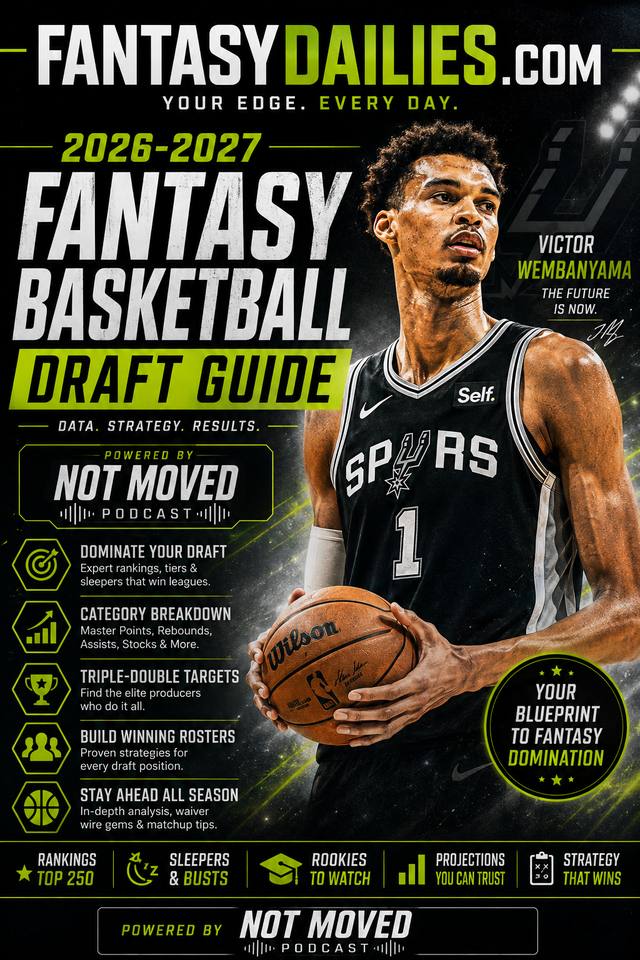
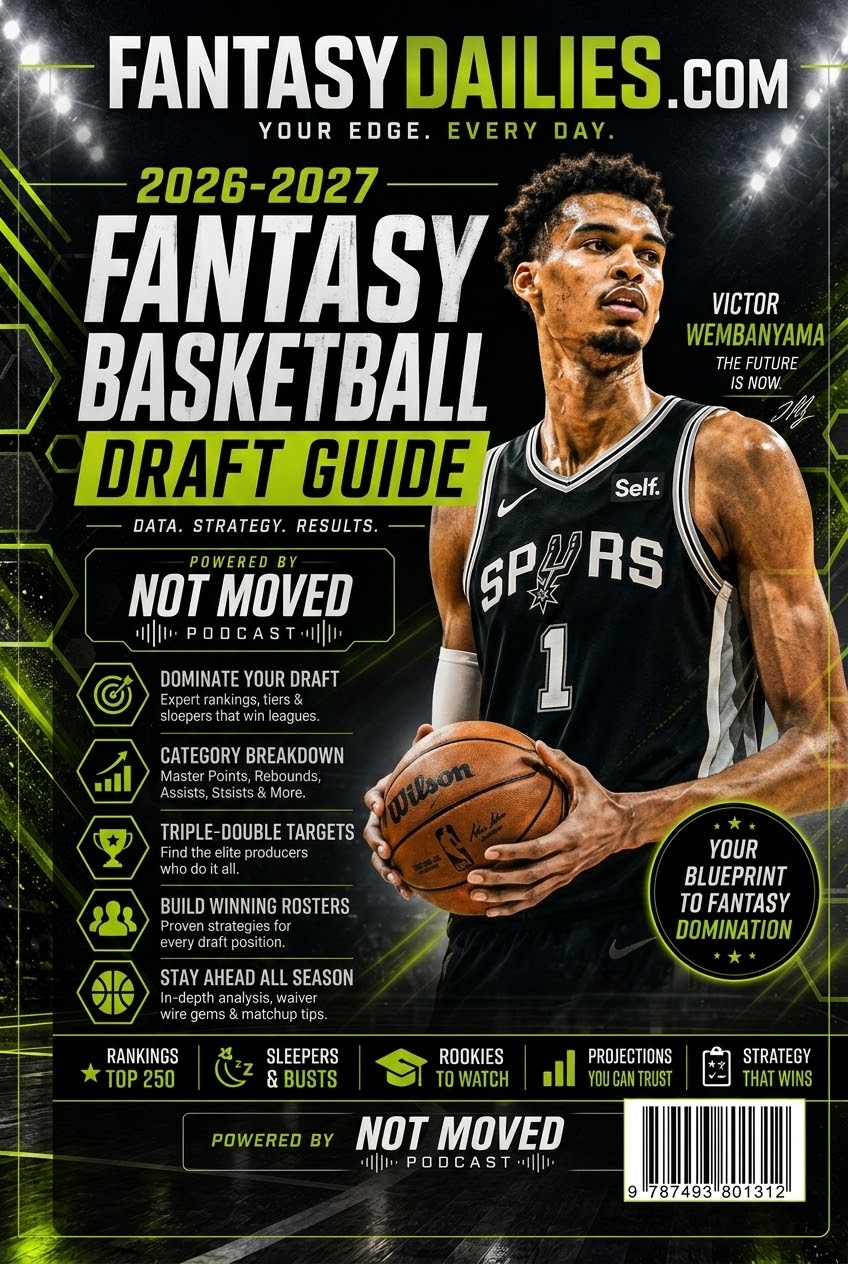
Fantasy basketball managers have a familiar problem every October. Everybody wants the superstar who puts up monster numbers. The managers who win their leagues are the ones who know when to take that superstar, which categories to build around, and which names are going too high. The full answer lives in our 2026-27 NBA draft guide: the Top 200, the tiers, the sleepers, the rookies and a capsule on every team. This preview is the short version, with a game plan you can run on draft night.
Everything below follows the same board as the draft guide, so the names and the order match. Open the draft board next to this page, run the NBA mock draft a few times, and check the NBA player news and the NBA depth charts for the latest rotations.
WHO ARE THE SUPERSTARS, AND WHERE DO THEY RANK?
The MVP conversation and fantasy value overlap, but they are not the same list. An MVP candidate can be a great pick. His price, his statistical profile and his games played still decide whether he is right for your roster. Here is how the biggest names land on our board in the draft guide:
Nikola Jokic, DEN: the statistical Swiss Army knife. Points, rebounds, assists, steals and efficient shooting from the center spot, and the passing is rare for a big man. He is No. 1 on the board.
Victor Wembanyama, SAS: scoring, rebounds, blocks and threes in one body. The board has him at No. 2 and calls him the blocks king. If his minutes and availability hold, he is the first-center argument.
Shai Gilgeous-Alexander, OKC: elite efficiency, steals and a dependable scoring foundation for managers who want a guard without giving up category balance. No. 3.
Luka Doncic, LAL: huge points and assists with rebounds from the guard spot. Turnovers are the price. No. 4, with the usage story changing now that LeBron James is a Philadelphia 76er.
Giannis Antetokounmpo, MIA: a top-five points-league pick and a nine-category headache, because the foul-line shooting and the missing threes cost you. The board has him at No. 43 for that reason. Decide your format before round one.
Do not confuse a name with a draft slot. The board is built from last season's production and then adjusted for the situation, and the System chapter in the draft guide explains exactly how.
TIER ONE: BUILD AROUND A SUPERSTAR (NOS. 1 TO 12)
The first twelve picks on our board are Nikola Jokic (No. 1), Victor Wembanyama (No. 2), Shai Gilgeous-Alexander (No. 3), Luka Doncic (No. 4), Tyrese Maxey (No. 5), Kawhi Leonard (No. 6), Donovan Mitchell (No. 7), Cade Cunningham (No. 8), Jamal Murray (No. 9), Jalen Johnson (No. 10), Anthony Edwards (No. 11), Lauri Markkanen (No. 12).
These are the players who can anchor a roster. Do not get trapped drafting by name recognition. Compare expected production, injury risk, category fit and which players are likely to be there at your next pick, and keep the draft simulator open on your phone so the next name is already waiting.
Two cases worth a second look. Kawhi Leonard is the only one of the twelve on a new team, and games played are the question mark. Luka Doncic is the other, with usage up and an offense that finally belongs to him.
TIER TWO: STARS WITH ONE QUESTION (NOS. 13 TO 30)
Tier Two is where the tags matter. Tyrese Haliburton (No. 13) (back from Achilles); Scottie Barnes (No. 14); Kevin Durant (No. 15) (age 38); James Harden (No. 16); Trey Murphy III (No. 17); Stephen Curry (No. 18) (age 38); Kyrie Irving (No. 19) (back from ACL); Karl-Anthony Towns (No. 20); Austin Reaves (No. 21) (usage up); Kevin Porter Jr. (No. 22) (murky role); Chet Holmgren (No. 23) (threes + blocks); Damian Lillard (No. 24) (back from Achilles); Michael Porter Jr. (No. 25); Jimmy Butler III (No. 26) (ACL recovery); Joel Embiid (No. 27) (health, lighter load); Amen Thompson (No. 28); Bam Adebayo (No. 29) (new frontcourt math); Keyonte George (No. 30) (crowded touches).
Every name here carries one question: age, a recovery, a crowded rotation or a new situation. That is the reason they are not in the first twelve. Read the tag, then decide whether the discount is worth the risk. The draft guide walks through all of them.
TIER THREE: PLAYERS WHO CAN WIN YOU CATEGORIES
The best draft is not always about collecting the biggest names. It is about filling the gaps your first few picks leave behind.
- Elite shot-blockers: prioritize centers and forwards who contribute blocks without forcing you to give up too much offense.
- High-volume three-point shooters: target players with reliable minutes and consistent attempts rather than streaky shooting.
- Assist specialists: once you have your main scorer, add guards who distribute without needing a big share of the offense.
- Steals specialists: steals swing head-to-head weeks, and a productive defensive guard or wing is valuable late in the draft.
- Efficient rebounders: look for players who help in rebounds and field-goal percentage without creating turnovers.
One more rule: do not draft a player just because he is listed at a position you need. A strong player who helps several categories is usually worth more than a mediocre one who fills a slot. The position pages in the draft guide show the best players at each spot, in board order.
SLEEPERS, BREAKOUTS AND PLAYERS TO MONITOR
A sleeper is not always an unknown. Sometimes it is an established player whose value has been discounted because of last season, an uncertain role or an injury. We keep the full list of sleepers and late darts in the draft guide, and the rookie class has its own chapter.
The young-star watchlist: Victor Wembanyama, Cade Cunningham and Anthony Edwards. Watch the assists and usage for Cade Cunningham, whose offensive responsibilities are the key to his value, and the three-point volume for Anthony Edwards.
The role-change watchlist. Pay special attention to players who benefit from one of these:
- A starting spot opening up.
- A teammate being traded or missing time.
- A new coach giving a player more responsibility.
- More minutes or ball-handling opportunities.
- A move from playing next to another dominant scorer to becoming the primary option.
These situations create the biggest gap between preseason expectations and real fantasy value. Check the NBA player news for each of them before draft night. Do not chase every player who scores 25 in a preseason game. Check minutes, shot volume and rotations.
NBA PLAYER PROJECTIONS: WHAT THE NUMBERS TELL US
Season-long projections are a starting point, not a guarantee. When you compare them, focus on these factors:
Projection categoryWhy it mattersGames playedAvailability decides total season value.Minutes per gamePlaying time drives opportunity.PointsImportant in points leagues and category scoring.Rebounds and assistsOften decide close head-to-head weeks.Steals and blocksScarcer categories that create an edge.Field-goal and foul-line percentageEssential in category leagues.Three-pointersValuable in category and many points formats.TurnoversCan sink an otherwise productive player in category leagues.Points leagues versus category leagues. In a points league, a player who fills the box score across several categories is extremely valuable, so use your league's actual scoring rules. In a nine-category league the strategy changes. A player who scores 30 but hurts you in turnovers and shooting percentages may be worth less than a player who helps in five or six categories. The best ranking is the one built around your league's rules. Our draft guide blends nine-category value with points value for exactly that reason.
THE FANTASY BASKETBALL DRAFT PLAN
Here is the approach I would use heading into draft day:
- Rounds 1 and 2: secure elite production. Prioritize players who contribute across several categories or give overwhelming value in your scoring format.
- Rounds 3 to 5: build around your first two picks. Started with scoring guards? Look for rebounds, blocks and efficient frontcourt production. Started with dominant bigs? Add guards who distribute and score efficiently.
- Rounds 6 to 9: target role upside, meaning players whose minutes, usage or responsibilities could grow.
- Middle and late rounds: focus on category balance, positional flexibility and dependable rotations. Do not spend every late pick on a speculative rookie who may not see steady minutes.
- Final roster spots: use them for upside. If your league allows frequent waiver moves, rotate speculative players until you find a breakout.
And please, do not draft an entire team from the best highlight package on social media. Highlights are not a fantasy category.
MORE TOOLS FOR DRAFT SEASON
- The 2026-27 NBA draft guide: the Top 200, tiers, sleepers, rookies and all 30 team capsules.
- The NBA mock draft and draft simulator: rehearse your draft before the real one.
- Draft central: every draft guide we publish in one place.
- The fantasy weeks schedule: plan around the weeks that matter, including playoff weeks.
- The season simulator: see the season play out before it happens.
- The NBA AI parlay builder and NBA DFS lineups: once the season is on, they are here.
FINAL WORD: PREPARE BEFORE EVERYBODY ELSE DOES
The 2026-27 season gives fantasy managers plenty of opportunity, and the edge comes from preparation, not from predictions made with false confidence. Start with the draft guide, rehearse in the NBA mock draft, watch the rotations and the injury news, and use your own league's scoring rules to find where the board offers value.
The goal is simple: draft production, anticipate opportunity and do not pay a premium for last season's reputation. Do your homework before you draft, and give yourself an edge before the season gets rolling.
FantasyDailies: Your Edge Every Day.