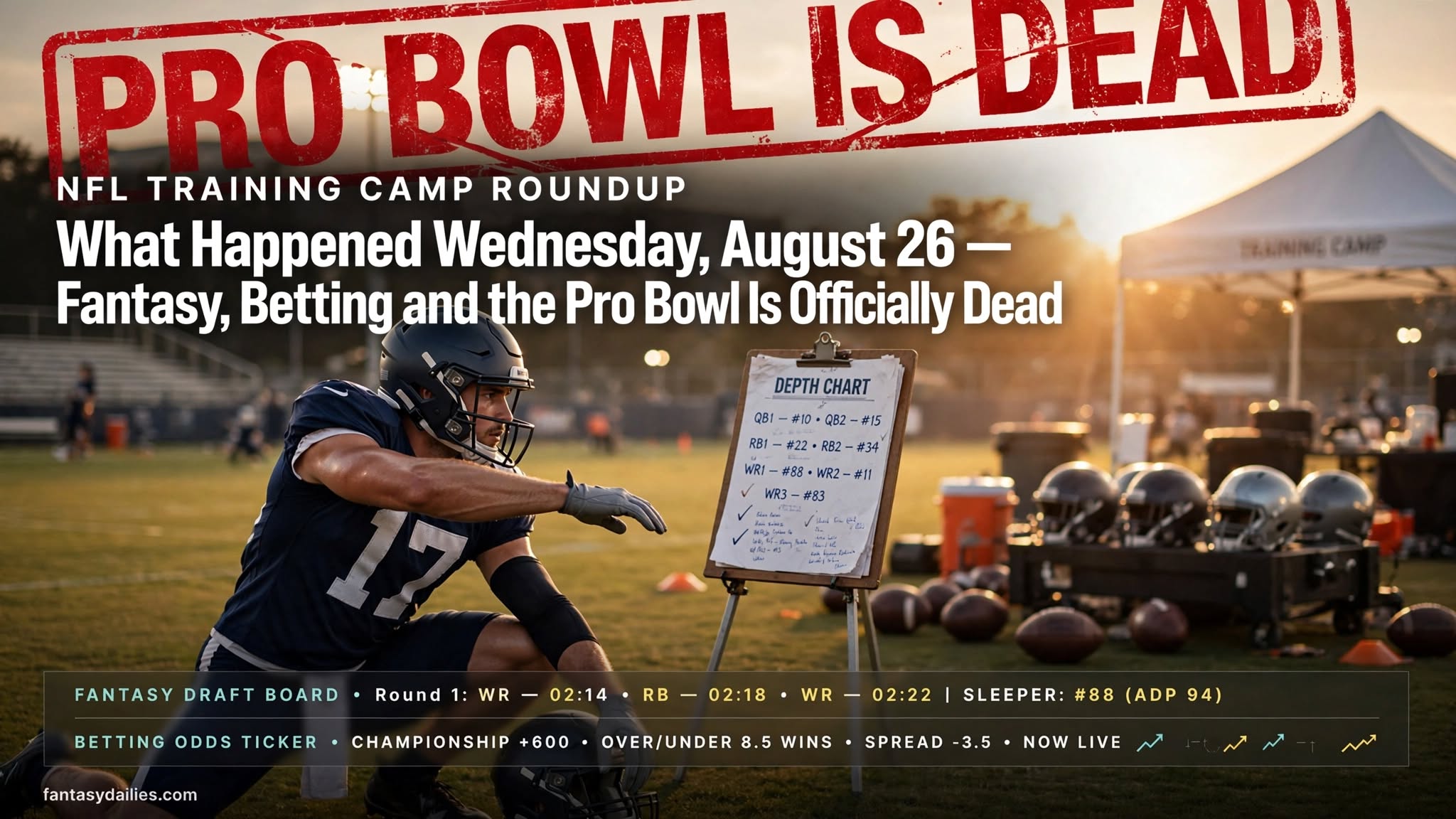
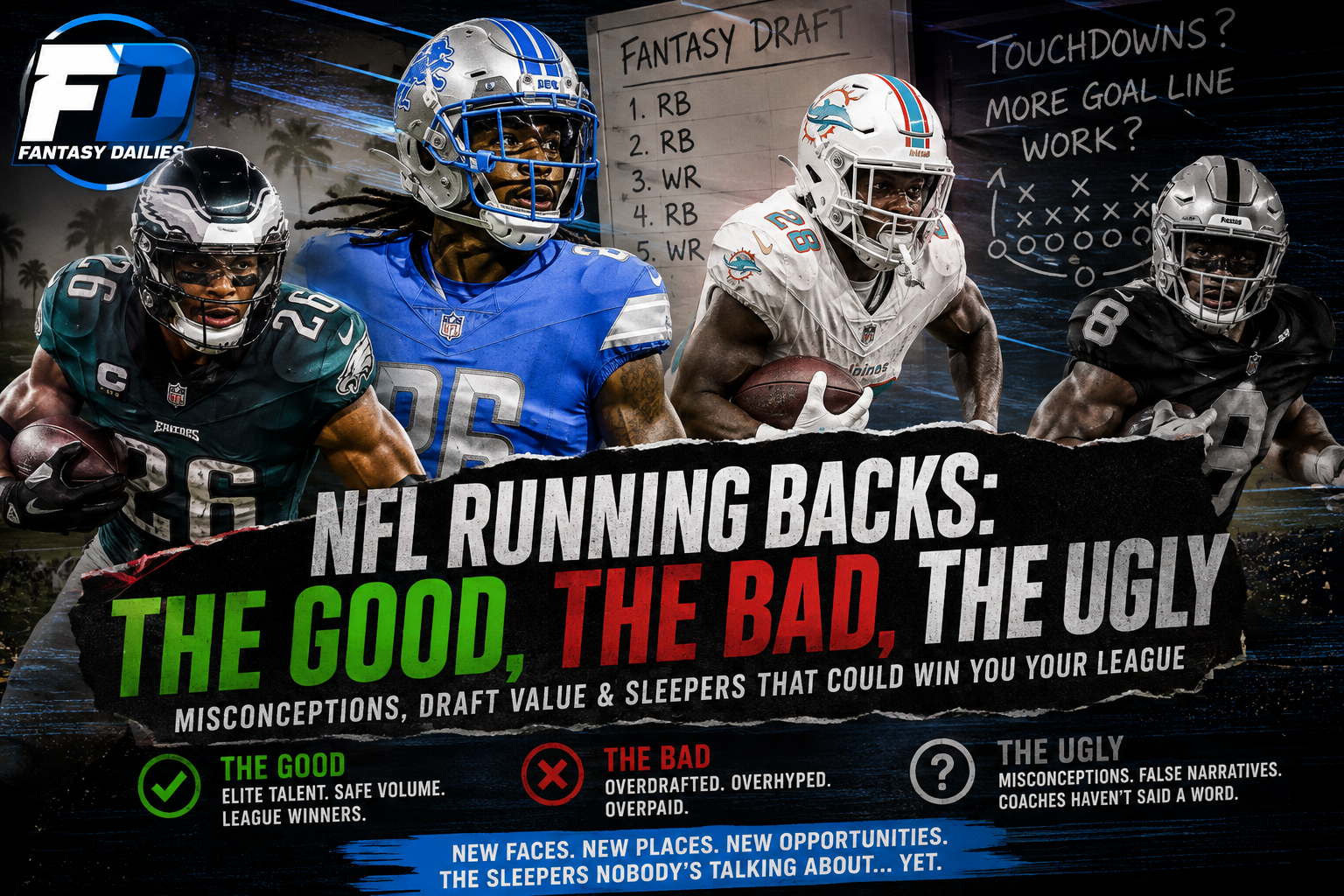
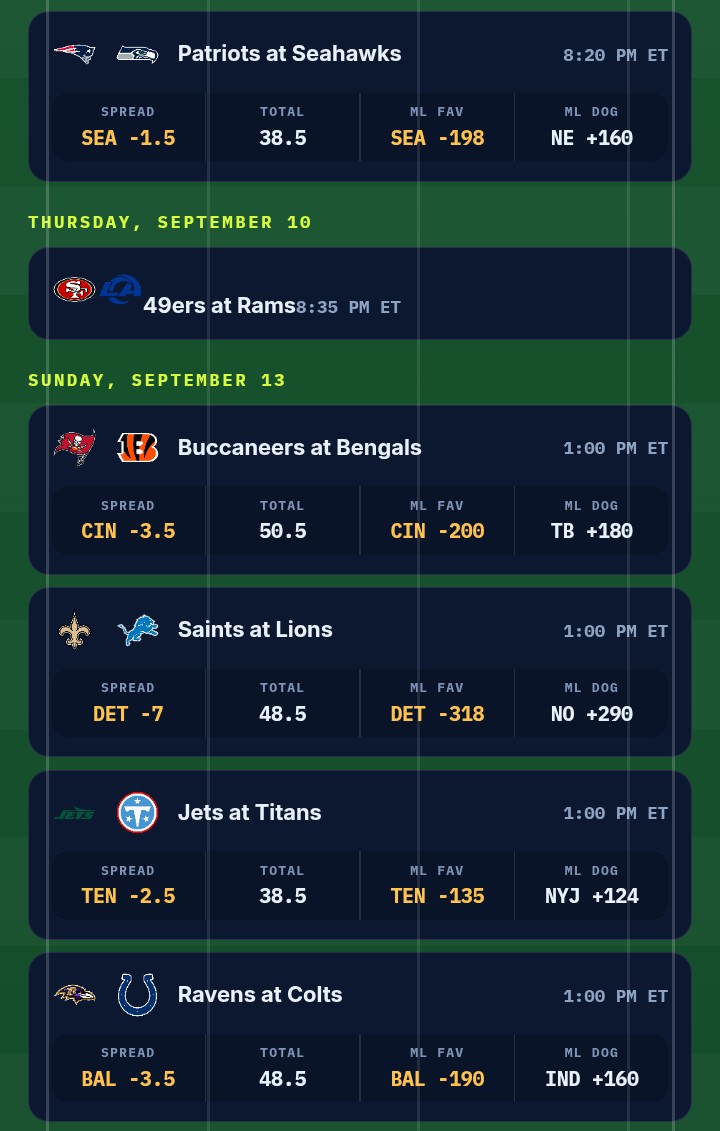
 Here's a stat that should change how you draft: half of all fantasy busts were never going to get the touches.
Not injured. Not bad. Just fourth in line at a position where a coaching staff had already decided who eats — and that decision was visible on a depth chart weeks before anybody paid for the player.
Which is why the team pages exist and why they lead with roster order rather than highlights.
All 32 teams: Kansas City · Buffalo · San Francisco · Dallas · Philadelphia · Detroit · Seattle · New England — and the rest here.
What's On One
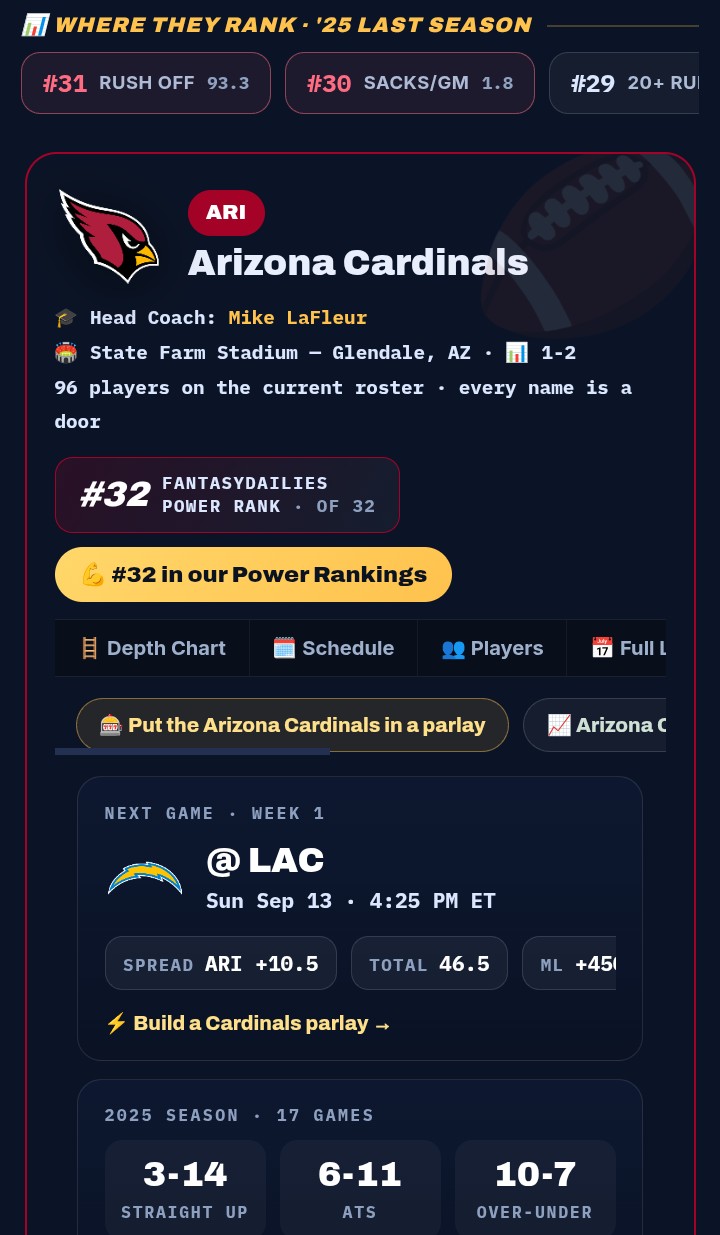
Current roster, live depth chart, injuries and the season schedule — and every single player links straight to his own card with prices, form and streak receipts.
That last part is the point. A depth chart that doesn't let you click through is a list of names; one that does is a research tool. You see the ordering, you tap the guy sitting second, and you find out whether the gap is real.
The Depth Chart Is The Most Underrated Page In Fantasy
People treat depth charts as reference. They're a forecast.
Coaching staffs decide who gets fed long before the season starts, and the chart is that decision written down. It's why a back with a 70% red-zone rush share has a touchdown floor and one at 20% is a boring flex no matter how the highlights look — a distinction you can see on the goal-line board before you spend a pick.
Three specific things worth checking on any team page before draft day:
Who's ahead of your guy, and by how much. A clear RB1 is a different asset to the winner of a camp battle nobody has settled.
Who's on PUP or coming back. A veteran signing usually happens because somebody isn't ready — and when that somebody returns, the signing's role evaporates.
Where the goal-line work goes. Frequently not to the player who gains the yards.
The Injury Report Is A Weekly Rhythm, Not A Page
The injury report runs to a schedule and knowing it is most of the value:
Wednesday the practice reports land — the earliest possible signal a role is changing, days before a box score shows it. Read a limited practice differently for a committee back than for an established workhorse.
Friday designations get ruled: OUT, Doubtful, Questionable. The gap between reading that Friday afternoon and Sunday at 11:45 is the difference between having a plan and having a panic.
Sunday morning inactives drop — the last free information before lock, and it decides more lineups than any projection.
Pair it with the player wire, which carries player items only — no team marketing, no ticket promos, no opinion columns.
Then The Schedule, Which Nobody Checks Early Enough
Every team page carries the full season, and two things are worth reading in August rather than November.
Byes, obviously — stacking three starters on the same bye is an unforced error that costs a week.
And December. Your league is decided in Week 15, 16 and 17. Those schedules have been public since spring and virtually nobody in your draft room will look at them.
The December Board grades every ranked player on exactly those weeks, scored against 2,172 real Decembers. Two players in the same tier, one spends the playoffs indoors and one goes to Buffalo in a wind advisory — take the first. It costs nothing, because you were flipping a coin anyway.
Team Context, Not Just Team Names
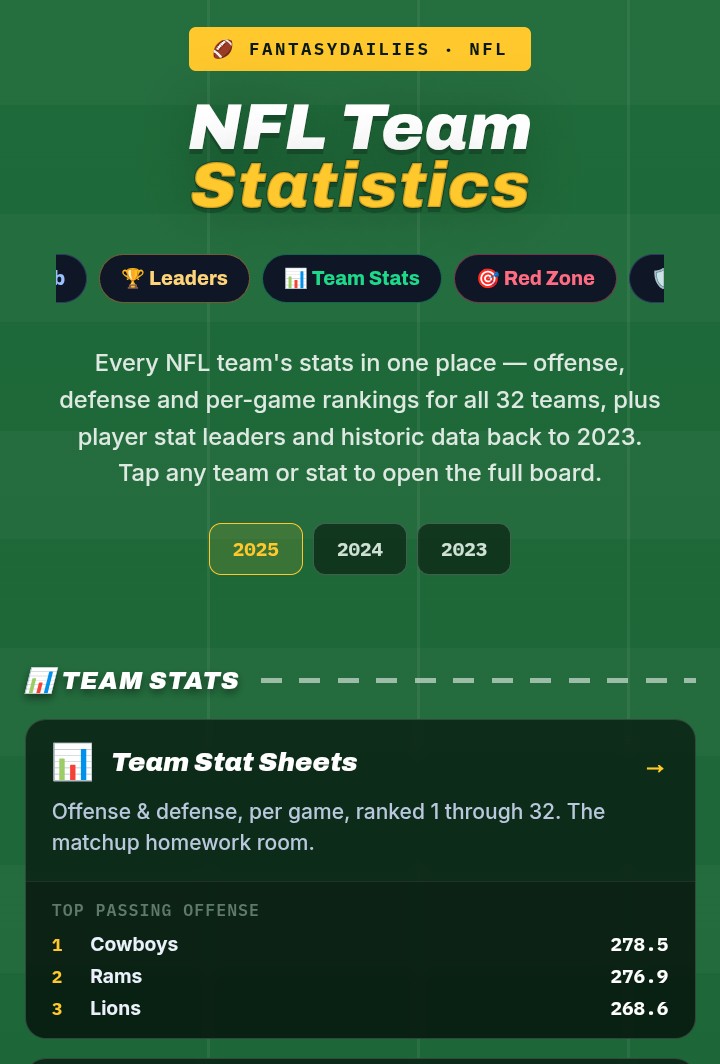
Team stat sheets run three seasons deep, ranked 1–32 per game — which is how you separate a defensive identity from one strange year. A unit shredded by tight ends three seasons running did not fix that over the summer.
The ATS board ranks every team against the spread with the rank right beside it. Team streaks shows live ATS, over and win runs, every number counted against a line we posted first.
And explosive plays allowed — read fewest-first, so a team at zero surrendered none. For fantasy, read it backwards: a ceiling play wants the defenses at the bottom.
Game By Game
Every matchup has its own page carrying the situational read, the series since 2002 and the average combined score. Schedule Spots judges rest edges, short weeks, traps and letdowns against 25 years, with the sample size on every split and a plain "no edge here" when there isn't one.
The head-to-head book goes back to 2002, and the Mismatch Machine crosses every game against 51 team stat ranks.
Turn It Into Decisions
Import your team and the Roster Doctor grades every man you own. Start or Sit for the close calls, the trade analyzer for the deal in your group chat, and the Free Agent Wire for the claims that win Octobers.
Still drafting? Draft Central, the 2026 Guide at 335 deep, the Big Board and the mock simulator.
The Honest Part
A depth chart is a snapshot of a decision that can change. Camp battles flip, a rookie earns work in Week 3, and a coordinator gets fired in October.
Which is the argument for checking it more often, not less. Everything else on this site is a lagging indicator of one thing: who is on the field.
Open the team pages → All 32, free, no account.