 The 2026 Draft Guide Got Deeper After We Published It
Most draft guides are finished the day they ship. Ours wasn't, and the stuff we've added since publication is the part that'll actually change your picks.
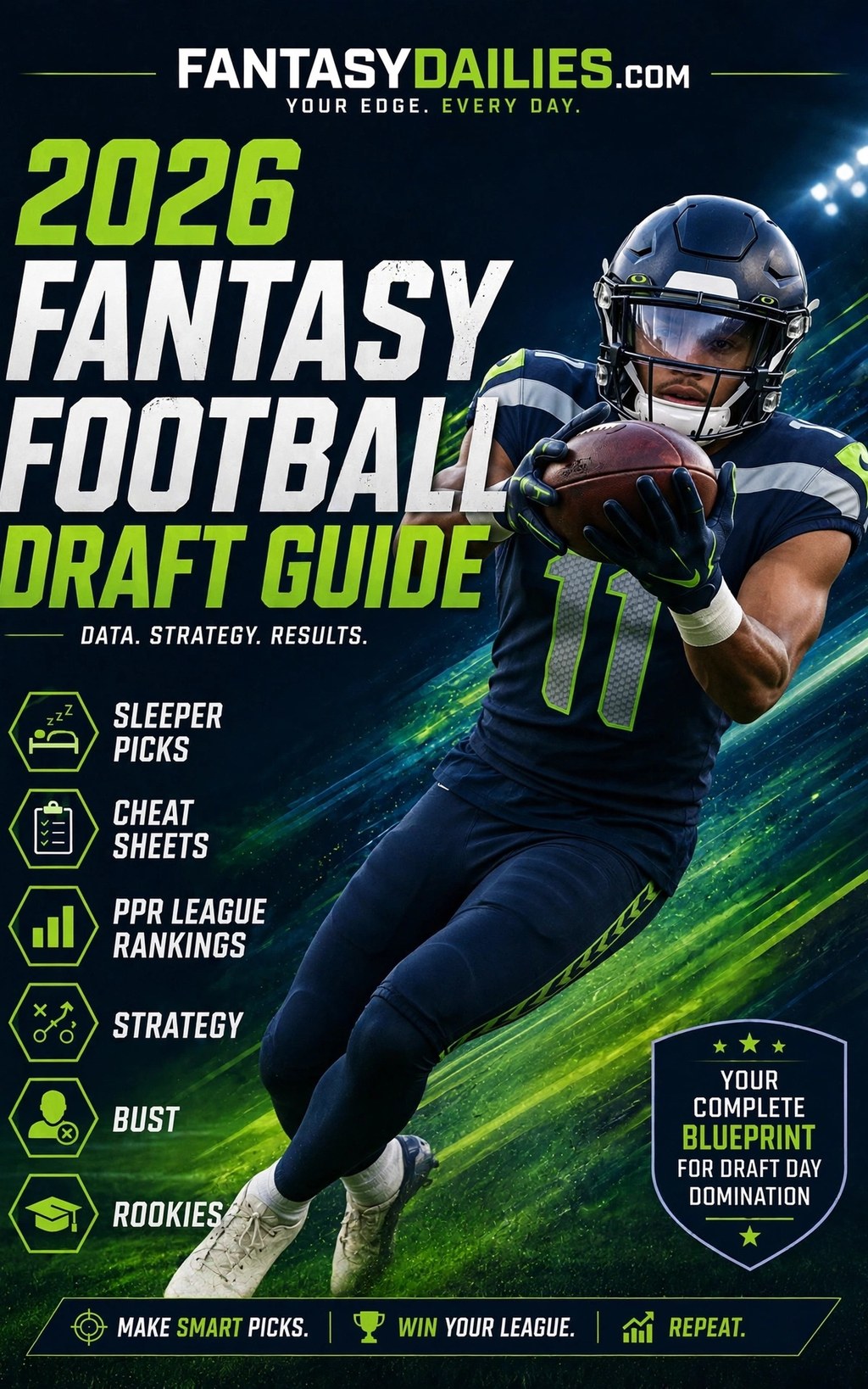
The 2026 Fantasy Football Draft Guide is still the spine — 335 players deep, tiers drawn where the betting market breaks rather than where a round number falls, sleepers, busts and a printable cheat sheet. That hasn't changed.
What's changed is everything sitting underneath it. Four new tools have gone live since the guide came out, and every one of them answers a question a ranked list can't.
1. December: The Weeks That Actually Decide Your League
Here's the hole in every draft guide ever written, ours included until now.
They all rank players for a full season. Your league isn't decided across a full season — it's decided in Weeks 15, 16 and 17. Three weeks. And those schedules have been public since spring.
The December Board grades every ranked player on the December he actually drafts into: the buildings he visits in the fantasy playoffs, scored on temperature, wind and real December scoring history from every December game in our vault. You get a grade out of 100 and a December-only rank.
How to use it: as a tiebreaker, on every close pick. Same tier, can't separate two guys, take the better December. It costs you nothing — you were flipping a coin anyway — and one of them spends the playoffs indoors while the other goes to Buffalo in a wind advisory in Week 16.
2. The Surface Book: Turf vs Grass, Player By Player
Everyone's heard someone claim a player is "better on turf." Almost nobody has the number.
The Surface Book splits every carry, catch and throw by the field it happened on, straight from official play-by-play. Yards per game, touchdowns and catch rate in two columns, with the sample size printed next to each split so you can tell a real trend from four games.
It matters on draft day because surface is knowable in advance — every stadium's surface is public and so is the schedule. And it compounds with the point above: grass fields fall apart in December, so a grass-negative player with a grass-heavy playoff schedule is a problem you can see in August.
3. Zone Charts On Every Player Card
Season totals tell you how much a player produced. They don't tell you where.
Every NFL player card now carries a zone breakdown:
- Quarterbacks get a six-zone completion chart. Josh Allen hit 78 percent short right last season and 28 percent deep right. Same arm, two completely different throws.
- Running backs get every carry sorted by the gap they ran through, left edge to right edge, with yards per carry and success rate for each. Jahmyr Gibbs went 5.39 to the right edge and 4.23 through left guard.
- Receivers get target zones by catch rate plus the air-yards-versus-YAC split — which tells you who survives a quarterback change and who doesn't.
- Everyone gets snap share, which is the most predictive number in fantasy football. Opportunity beats talent, every time.
4. The Weather Book
6,511 games since 2002, joined to the hourly weather at the stadium they were played in. Every team's real record in cold, wind, heat and December.
A split only gets published if it holds across at least ten games and sits twenty points off that team's own win rate — which kills the most common fake weather stat, a bad team losing in the cold. The Packers are 0-10 on the road at night under 40 degrees. That one clears the bar.
Putting It Together On Draft Day
The order that actually works:
- Start with tiers, not rankings. The Big Board groups the coin flips so the only question on the clock is whether this is the last guy in his tier.
- Break ties with December. Free information, and almost nobody in your league is looking at it.
- Sanity-check the workload. Depth charts and snap share — half of all busts were never getting the touches.
- Practice the slot. Drafting from the 1 is a different game than the 12. Run mocks until draft night feels slow.
- Print the board. The printable kit comes in 10, 12 and 14-team versions with labels for the wall.
Everything's collected in Draft Central.
Where To Get The Guide
Free with a Velvet seat at $9.99 a month, which also unlocks every tool on the site unlimited. Or buy the book outright from Amazon, Audible, Apple Books, Barnes & Noble or Walmart.
After The Draft
Import your team from Yahoo, ESPN or Sleeper and every tool works on your actual roster. The Roster Doctor grades every man you own. Start or Sit settles the close calls, the Free Agent Wire flags the claims that win Octobers, and the Trade Analyzer ends the group chat argument.